How to Choose the Right Water Pump Casing for Your Needs?
Choosing the right water pump casing can be a challenging task. It’s not just about fitting a pump into a space. Quality, material, and durability matter greatly. Each detail impacts the pump’s performance. The ideal casing helps ensure your pump operates efficiently and lasts longer.
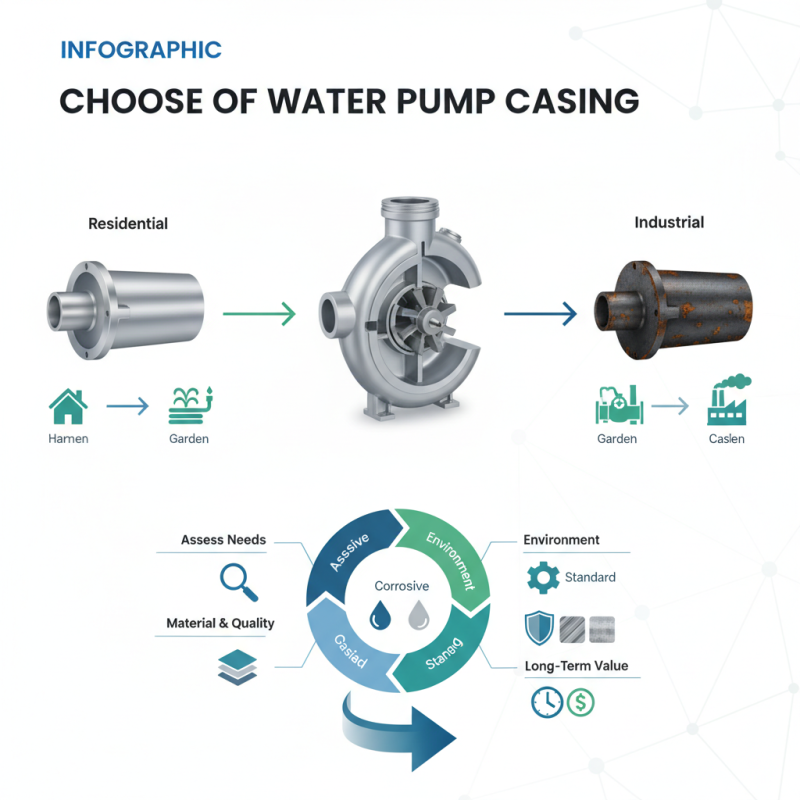
Consider your specific needs before making a choice. Are you using it for residential purposes? Or is it for an industrial application? The environment can also dictate your choice. Corrosive areas require robust materials. On the other hand, standard setups might need something more basic.
Be mindful of common pitfalls. Skimping on quality may lead to frequent replacements. Not all casings are created equal. Evaluate options carefully. Take the time to reflect on what works best for your situation. The right water pump casing can save you time and money in the long run.
Understanding the Different Types of Water Pump Casings
When selecting a water pump casing, understanding the different types is crucial. Casings primarily fall into two categories: metallic and non-metallic. Metallic casings are often robust and durable. They resist corrosion well, making them suitable for harsh environments. However, they can be heavier, adding complexity to transportation.
Non-metallic casings, like those made from plastics, are lighter. They offer versatility in installation and are resistant to certain chemicals. Yet, they may not withstand high pressures as well as metallic options. It's vital to assess the intended use before making a decision. The operational environment can greatly influence performance.
In the end, every option has its trade-offs. A metallic casing might be overkill for a simple garden pump. Conversely, a non-metallic casing might fail under high-pressure conditions. Evaluating your specific needs and future possibilities will help narrow down the choices. Be wary of settling for the first option; there may be better fits out there. Reflect on long-term performance to ensure satisfaction with your choice.
Key Factors to Consider When Selecting a Water Pump Casing
Choosing the right water pump casing is essential. Consider the material type. Common options include cast iron, stainless steel, and plastic. Cast iron offers durability and resistance to wear. In contrast, stainless steel is ideal for corrosive environments. Plastic casings are lightweight but may lack strength. A study by the Hydraulic Institute highlights that material choice affects maintenance and lifespan by up to 30%.
Next, evaluate the pump's intended use. Domestic applications may require lightweight options. Industrial settings often demand robust casings that withstand high pressures. Research shows that a mismatch can lead to frequent breakdowns. This not only disrupts operations but also incurs additional costs. Understand the specific demands of your environment before making a choice.
Size matters significantly. An oversized pump casing can cause inefficiencies. On the other hand, an undersized model may not deliver adequate performance. Inaccurate calculations can lead to pump cavitation, which ironically damages casings. A report from the American Society of Mechanical Engineers stresses that proper sizing can enhance efficiency by up to 20%. Consider all factors carefully to ensure your investment yields the best results.
Water Pump Casing Selection Factors
Evaluating Material Options for Water Pump Casings
When selecting a water pump casing, material choice plays a crucial role. Various materials offer distinct advantages and drawbacks. For instance, cast iron is robust and durable. However, it can be heavy. Stainless steel, on the other hand, is lighter. It resists corrosion effectively but may be costlier.
Plastic is another option, often favored for its lightweight nature. It can be less expensive too. Yet, plastic may not withstand high temperatures as well as metal options. Evaluating the environment where the pump operates is essential.
Are you considering durability over weight? Will the pump be exposed to harsh conditions? No single material is perfect. Take time to reflect on your specific needs. Balancing cost, performance, and longevity will lead to a better decision.
Assessing Pump Capacity and Performance Requirements
Choosing the right water pump casing starts with understanding performance needs. You need to assess the pump's capacity. Consider the required flow rate and head height. These factors determine how effective the pump will be in your application. For example, a garden pump may need modest capacity, while an industrial setup requires more robust performance.
Performance is not just about numbers. It involves recognizing the conditions where the pump will operate. Will it face high temperature or abrasive materials? Such factors can affect the lifespan of the pump casing. If you overlook these aspects, you may end up underperforming. Assessing these specifics is vital. Look at the environmental conditions rigorously.
Finally, don’t ignore the compatibility with existing systems. The pump’s design must fit within your infrastructure. A mismatch might lead to operational issues. Regular consultation and feedback can help refine your choices. Balancing capacity with environmental considerations is essential. Take your time with these decisions for the best results.
Maintenance and Durability Considerations for Pump Casings
When selecting a water pump casing, maintenance and durability are crucial aspects. A pump's casing often endures high pressure and corrosive substances. Choosing materials that resist wear is essential. Stainless steel is common, but other options exist. Consider the operating environment when making your selection.
Regular inspections can prevent minor issues from escalating. Look for signs of wear or corrosion. Small cracks can lead to major failures. Cleaning the casing periodically helps maintain efficiency. Pay attention, as neglect can cause costly downtime.
Durability varies among casings, so weigh your options carefully. Think about how often you’ll use the pump. A casing designed for heavy use may be different from one meant for light service. Reflect on your needs, as this can influence your choice significantly. Remember, investing in quality can save money in the long run.