What is Die Casting Molds and How Do They Work?
Die Casting Molds are crucial in manufacturing. They allow for the production of intricate metal parts efficiently. According to John Smith, a leading expert in the die casting industry, "The precision of die casting molds is unmatched." This highlights their significance in various sectors.
Die casting molds work by forcing molten metal into a mold cavity. This process ensures that the metal takes on the precise shape required. It is often used for parts in automobiles and electronics. However, the creation of these molds is not always flawless. Factors such as material defects or design flaws can lead to challenges.
Some molds may not perform as expected. This imperfection requires constant evaluation and adjustment. As John Smith states, "Continuous improvement is key to mastering die casting molds." This concept emphasizes the need for ongoing innovation in the industry. Understanding die casting molds is essential for achieving high-quality production.
What Are Die Casting Molds and Their Role in Manufacturing?
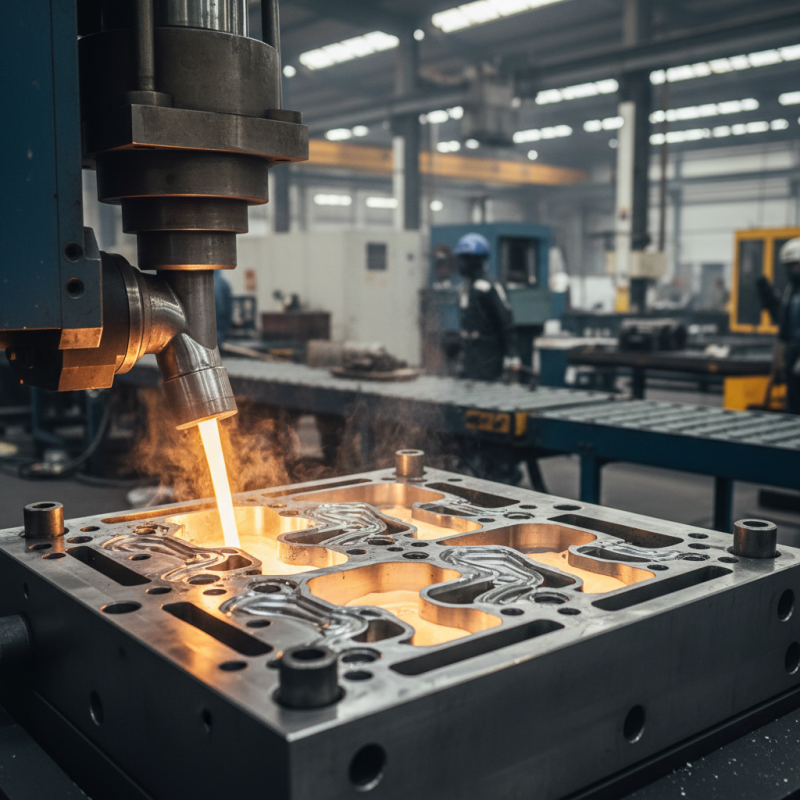
Die casting molds play a vital role in manufacturing, particularly for metal parts. They are precision-engineered tools that allow for the mass production of components with complex shapes. Typically made from steel or iron, these molds are designed to withstand high pressures. According to a recent industry report, die casting can produce parts with an accuracy of ±0.1 mm, showcasing its precision.
The process begins with molten metal being injected into the mold at high speeds. This rapid injection creates a thin layer of metal that solidifies quickly, allowing for shorter cycle times. For instance, aluminum die casting can lead to cycle times of under ten seconds. However, it's essential to note that mold design is critical. Poor mold design can result in issues such as incomplete filling or surface defects, which may lead to waste.
Additionally, the sustainability of die casting is an ongoing concern. Though the process is efficient, it can sometimes lead to excessive scrap. Industry estimates suggest that about 20% of the metal used may become waste, prompting manufacturers to seek enhanced recycling methods. Balancing efficiency and sustainability remains a challenge for many in the sector.
Types of Die Casting Molds Used in Various Industries
Die casting molds are essential tools in various industries. These molds allow manufacturers to create precise metal parts. They work by forcing molten metal into a mold cavity under high pressure. Once cooled, the solidified part is ejected. The process is efficient and produces parts with excellent dimensional accuracy.
Different types of die casting molds cater to specific needs. For instance, hot chamber molds are suitable for low-melting-point alloys. They can produce parts quickly, but wear out faster. Cold chamber molds handle higher melting alloys, offering durability. Yet, the cycle time is longer. Both types have their benefits and drawbacks.
Industries like automotive and aerospace rely heavily on die casting. They need complex shapes and robust materials. However, quality control can be a challenge. Flaws in molds or improper cooling can lead to defects. Continuous improvement is necessary to enhance efficiency and accuracy. Each industry faces unique demands, requiring tailored solutions in mold design.
The Die Casting Process: Steps and Key Parameters
Die casting is a precise manufacturing process. It creates parts by forcing molten metal into molds. One must understand the die casting steps for effective production. The process consists of several key stages: mold preparation, metal melting, injection, cooling, and ejection.
During mold preparation, dies need to be cleaned and coated for optimal performance. This step impacts the quality of the final product. Data from the Die Casting Industry reports that over 60% of defects arise from improper mold setup. Metal is melted at high temperatures, often exceeding 700 degrees Celsius. This step requires careful temperature control to maintain material integrity.
Injection follows melting. The molten metal is injected into the mold at high speed. Pressure plays a crucial role here. A report shows that lower injection pressures can lead to incomplete fills, affecting part dimensional accuracy by as much as 30%. After cooling, components are ejected from the mold. However, issues like warping can occur if cooling times are not optimized. This highlights the importance of monitoring all parameters throughout the process for better results.
Die Casting Process: Key Parameters Over Different Materials
Material Selection for Die Casting Molds: Considerations and Effects
Material selection for die casting molds plays a crucial role in the manufacturing process. The right materials can enhance the mold’s durability and performance. Common choices include steel, aluminum, and copper alloys. Each material has its advantages and drawbacks. Steel molds, for instance, are strong and long-lasting. However, they can be costly and heavy.
Aluminum is lighter but may wear down faster. It’s essential to consider thermal conductivity too. Materials with high thermal conductivity help maintain temperature control during casting. This ensures better quality parts. However, achieving the perfect balance between cost and performance can be challenging.
Design specifications must also align with the selected material. Some materials may not withstand high temperatures as effectively as others. This can lead to defects. Regular testing and evaluation of the molds under real production conditions are necessary. An ideal selection can significantly impact the efficiency and lifespan of the molds, making this choice vital for any die casting project.
What is Die Casting Molds and How Do They Work? - Material Selection for Die Casting Molds: Considerations and Effects
| Material Type | Characteristics | Applications | Cost Effectiveness |
| Aluminum | Lightweight, excellent thermal conductivity, high corrosion resistance. | Automotive parts, consumer electronics, and aerospace components. | Moderate cost, widely used due to balance of price and performance. |
| Zinc | High melting point, excellent surface finish, and good dimensional stability. | Electronic housings, plumbing fittings, and small automotive components. | Cost-effective for intricate parts but can be more expensive than aluminum. |
| Magnesium | Very lightweight and high strength-to-weight ratio. | Aerospace, automotive applications, and sports equipment. | Higher initial cost due to processing but saves weight, improving efficiency. |
| Copper Alloy | Excellent electrical and thermal conductivity, good corrosion resistance. | Electrical connectors, heat exchangers, and plumbing applications. | Higher material cost but offers benefits for electrical applications. |
Maintenance and Lifespan of Die Casting Molds in Production Processes
Die casting molds are essential for producing precise metal parts. They come into contact with molten metal, forming intricate shapes. Over time, these molds wear down. This wear and tear can affect the quality of parts produced. Regular maintenance can extend their lifespan. However, neglecting care may lead to costly production delays.
Maintenance involves checking for cracks and deformities. Routine cleaning is necessary to remove any residue. If a mold has significant damage, it may need repair or replacement. Some molds might only last for a few thousand cycles. Others can endure tens of thousands. Factors like material choice and usage frequency greatly influence durability.
Reflection on these aspects is crucial. Operators often overlook the need for systematic checks. Relying on intuition can lead to unexpected failures. Understanding the mold's condition is vital for smooth operations. Investing in proper maintenance procedures pays off. When molds are properly cared for, products are more consistent. This creates a foundation for long-term production success.