How to Master the Sand Molding Process for Efficient Casting?
The sand molding process is a key technique in metal casting. It allows for the production of complex shapes. Experts like Dr. Richard Summers emphasize its importance, stating, "Mastering the sand molding process can significantly enhance casting quality." This technique involves creating molds from sand, making it essential for various industries.
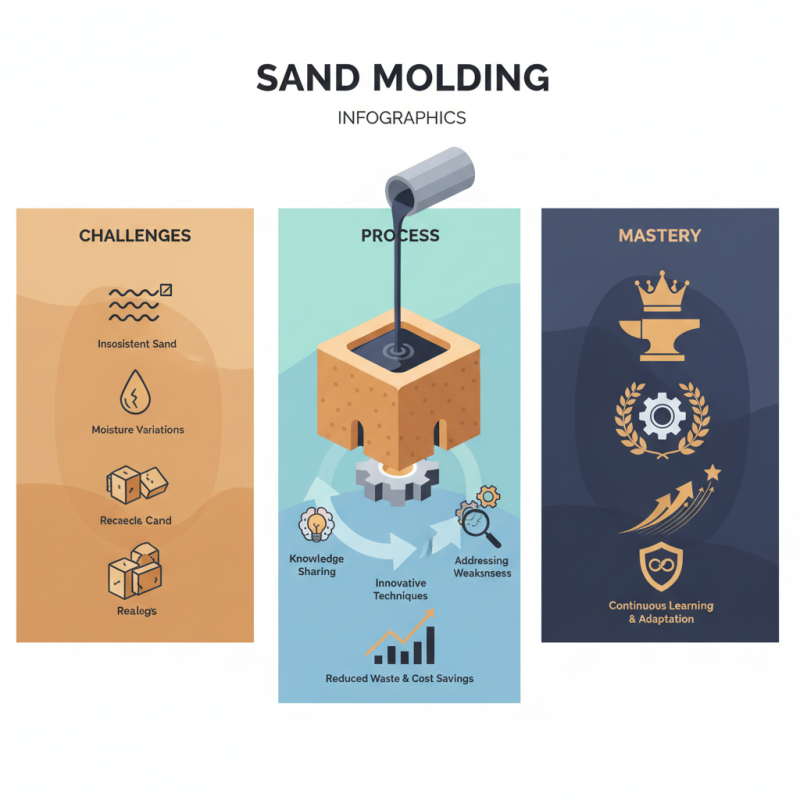
Despite its benefits, the sand molding process has challenges. The consistency of the sand mixture can affect mold strength. Variations in moisture content also lead to defects in the final product. Regular reflection on these aspects is vital for improvement. A well-executed sand molding process can reduce waste and save costs. However, it requires continuous learning and adaptation.
The journey to mastering the sand molding process includes trial and error. Knowledge sharing is crucial among teams. By exploring innovative techniques and addressing weaknesses, professionals can optimize their methods. Success in this field demands a commitment to refining skills and embracing feedback.
Understanding the Basics of Sand Molding in Casting Processes
Understanding the sand molding process is key to efficient casting. Sand molding involves creating a mold using sand mixed with a bonding agent. This mixture can take different forms. The basic principle remains the same. A pattern is placed in the sand, then the sand is compacted around it. The resulting mold captures the pattern's shape.
The quality of the sand is vital. Sand should have the right grain size and moisture content. Poor-quality sand can lead to defects in the castings. Small variations in these parameters can have a big impact. It’s important to test and adjust the sand mixture regularly. The molding environment should be controlled as well, as temperatures can change how the sand behaves.
Mistakes can happen during this process. Sometimes, the mold doesn’t hold its shape. In other cases, the cast may stick to the sand. Refining techniques takes time and practice. Not every attempt will yield perfect results. Observing what works and what doesn't is essential. The road to mastering sand molding is filled with learning opportunities.
Selecting the Right Type of Sand for Molding Applications
Selecting the right type of sand for molding applications is crucial for efficient casting. Silica sand remains the most popular choice. According to industry reports, around 75% of foundries use silica sand in their processes. This sand provides excellent casting surface quality and strength, which ensures durability in finished products. However, using silica sand also has drawbacks. Its health concerns and environmental impact cannot be overlooked.
Alternative sands are gaining attention, such as zircon sand and olivine. Zircon offers good thermal stability. It withstands high temperatures without degrading. Yet, it is more expensive than silica sand. Interestingly, olivine sand is becoming popular due to its lower cost and environmentally friendly properties. However, finding a reliable supplier can be a challenge.
The choice of sand can impact not just the mold quality but also the entire casting process. Properties like grain shape and size affect fluidity and compaction. Using the wrong sand may lead to defects like inclusions and poor surface finish. Exploring different types can optimize various molding applications. Sound decision-making is essential for success in this area.
Steps to Prepare and Set Up a Sand Molding Process Efficiently
Mastering the sand molding process is vital for efficient casting. Start by selecting the right type of sand. For example, a mixture of silica, clay, and water is crucial for durability. The American Foundry Society notes that a proper mix can improve mold strength by 25%. Furthermore, connectivity is essential. Ensure your team communicates effectively during this phase. Over 30% of foundry defects are linked to poor communication.
Next, prepare your workspace meticulously. Cleanliness reduces contamination risks. Arrange tools and materials systematically. This promotes a smoother workflow. In a recent industry study, 20% of delays were traced back to disorganized workspaces. Reflect on your past setups. Were there unnecessary interruptions? Addressing these issues can lead to improved efficiency.
Don’t overlook the importance of testing the mold. Conduct trial runs before large production. This practice helps identify faults early. Remember, a mold taking too long to set can cause project overruns. Invest time in refining your methods, and you will see results.
Techniques for Ensuring Proper Mold Strength and Integrity
Ensuring proper mold strength and integrity is crucial in sand molding for efficient casting. One effective technique is using the right sand mixture. A good balance of sand, clay, and water creates cohesion. You want your sand to hold shape but still be easy to work with. Experimenting with different ratios can yield surprising results. However, getting this mix perfect takes time and practice. Sometimes, your mix may come out too dry or too wet, leading to weak molds.
Another aspect of mold integrity is compaction. Properly compacting the sand helps eliminate air pockets. A well-compacted mold withstands the molten metal's heat better. Using a mechanical compactor can help achieve uniform density. Yet, over-compaction might also lead to cracking. Finding the right pressure is essential, but it's often trial and error. You may see cracks appear in your molds after pouring, reminding you that perfection is elusive.
Lastly, curing the mold after preparation is vital. Allowing it to dry ensures better strength. However, be cautious. If left unattended for too long, the mold can become too brittle. You may lose some molds in the process. Reflecting on these past failures fosters growth and improvement. Embracing imperfections can lead to better techniques and stronger molds in future projects.
Common Challenges in Sand Molding and Their Solutions
Sand molding is a popular method in the casting industry, but it has its challenges. One common issue is inconsistent mold strength. According to industry reports, nearly 30% of cast defects arise from weak molds. This can lead to unexpected failures during the casting process. To combat this, foundries can focus on optimizing the sand-to-binder ratio. A ratio that is too high or too low can affect the final product's integrity.
Another significant challenge is sand contamination. Dust and foreign particles can weaken the mold, resulting in surface defects. Studies indicate that contaminants can reduce mold strength by up to 25%. Regular cleaning of the sand molds and using high-quality sand can help mitigate this issue. Additionally, monitoring the environmental conditions can prevent moisture absorption, which adversely affects mold performance.
Worker skill levels also play a crucial role. Not all workers are trained equally in sand molding techniques. A lack of training can result in improper handling of materials, leading to defects. Investing in training programs can enhance skills and reduce error rates. A well-trained workforce is essential for achieving efficiency and consistency in the sand molding process.
Common Challenges in Sand Molding Process and Their Solutions