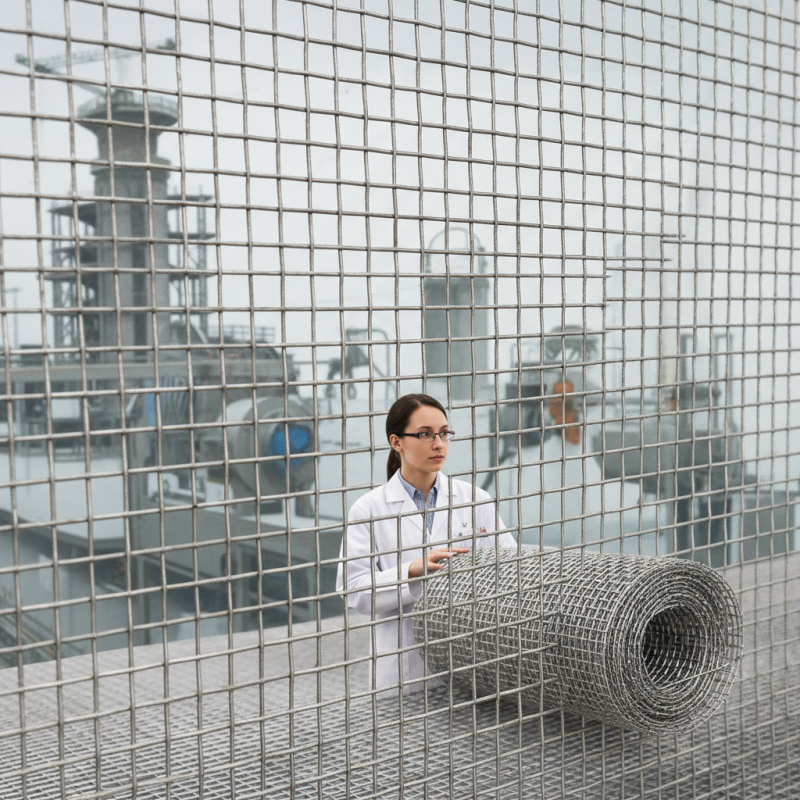
What is Stainless Steel Wire Mesh and Its Applications?
stainless steel wire mesh has become a vital material in various industries. This versatile mesh offers strength, durability, and corrosion resistance. Renowned expert Dr. Emily Johnson states, "Stainless steel wire mesh is the backbone of modern engineering applications." Her observation highlights its importance.
In construction, stainless steel wire mesh serves as reinforcement. It enhances concrete strength and stability. In the food industry, it is essential for filtering and processing. The high resistance to rust makes it ideal for sanitation.
However, the use of stainless steel wire mesh isn’t without challenges. It can be expensive, and sourcing quality materials requires careful selection. Many users face difficulties in knowing which specifications to choose. Understanding these nuances is crucial for optimal application. The right choices lead to lasting performance and satisfaction.
What is Stainless Steel Wire Mesh?
Stainless steel wire mesh is a versatile material used in various applications. It consists of woven stainless steel wires that provide strength and durability. The mesh is resistant to corrosion, making it ideal for harsh environments. It is often used in industrial settings for filtration and separation processes.
This type of mesh is also popular in construction work. Architects and engineers utilize stainless steel wire mesh in reinforcement applications. It enhances the structural integrity of concrete and other materials. In the food industry, stainless steel wire mesh is used for sieving and straining. It ensures cleanliness and safety in food preparation. However, its cost may be a consideration for some projects.
Beyond industrial uses, stainless steel wire mesh finds applications in home decor. People use it in creative projects, like room dividers and safety screens. It can add a modern touch to interiors. Yet, working with wire mesh can be challenging. Proper handling and cutting techniques are crucial to avoid injury. The mesh can also have sharp edges, requiring careful installation. These factors may lead to mistakes, so caution is essential.
Properties and Characteristics of Stainless Steel Wire Mesh
Stainless steel wire mesh is known for its durability and versatility. It resists rust and corrosion. This makes it ideal for various applications. The mesh comes in different sizes and patterns. Each design serves specific needs. Its strength can handle heavy loads while maintaining flexibility.
In construction, stainless steel wire mesh provides excellent support. It is used in concrete reinforcement and safety barriers. In the food industry, it's vital for hygiene. The mesh allows for efficient drainage. Also, it prevents contaminants from entering. Applications vary widely, from industrial filters to decorative items.
**Tips:** Consider the wire diameter when selecting mesh. A thicker wire enhances strength but may limit flexibility. Think about environmental factors too. Will it be exposed to chemicals or extreme temperatures? Evaluate your specific needs before purchasing to ensure it meets your requirements.
Applications of Stainless Steel Wire Mesh
Common Manufacturing Processes for Stainless Steel Wire Mesh
Stainless steel wire mesh is essential in various industries. It is known for its durability and resistance to corrosion. This wire mesh is produced through several manufacturing processes, each with its unique characteristics.
Welding, weaving, and sintering are common methods. In welding, wires are joined at points to create strong mesh panels. This process often leads to inconsistencies. Weaving involves interlacing wires at right angles. This method produces various patterns and mesh sizes. However, it may compromise strength in some cases.
Sintering is another technique used for finer applications. During sintering, powdered stainless steel is heated, allowing particles to fuse. This results in a porous structure ideal for filtration needs. Yet, it can be expensive and may not suit all projects. Understanding these processes helps in selecting the right mesh for specific applications. Each method has trade-offs, and users must consider their particular requirements.
Applications of Stainless Steel Wire Mesh Across Industries
Stainless steel wire mesh is a versatile material used in various industries. Its durability and corrosion resistance make it ideal for applications in filtration and screening. In the food industry, for example, it is used to create protective barriers. This mesh keeps contaminants at bay while allowing airflow.
In the construction sector, stainless steel wire mesh plays a crucial role as well. It reinforces concrete structures, adding strength and stability. Many architects prefer it for aesthetic details too. A mesh façade can enhance a building's design. In agriculture, it serves as fencing or protection for crops. Farmers often rely on this material to keep pests out.
In fields like mining and refinery, it’s essential for separating materials. The size of the mesh can vary, tailored to specific needs. However, some workers find handling the mesh difficult. It can be cumbersome to install without proper tools. This can lead to inefficiencies that require careful attention.
Benefits of Using Stainless Steel Wire Mesh in Various Settings
Stainless steel wire mesh is versatile and durable. It is used in several settings, reflecting its diverse applications. One major benefit is its resistance to corrosion. This makes it ideal for environments where moisture is a concern. Whether in kitchens, laboratories, or outdoor spaces, it withstands the test of time.
Another advantage is its strength. Stainless steel wire mesh can bear heavy loads without deformation. This feature is particularly useful in construction and industrial applications. It can act as a safety barrier or support system. The mesh is also easy to clean, maintaining hygiene in food processing or medical facilities.
Yet, its high initial cost can be a downside. For some projects, this might limit its use. Regular maintenance is still necessary to prevent rust over time. While it’s low-maintenance compared to other materials, neglect can lead to issues. In summary, its benefits often outweigh the drawbacks, but careful consideration is still important.